


Introduction
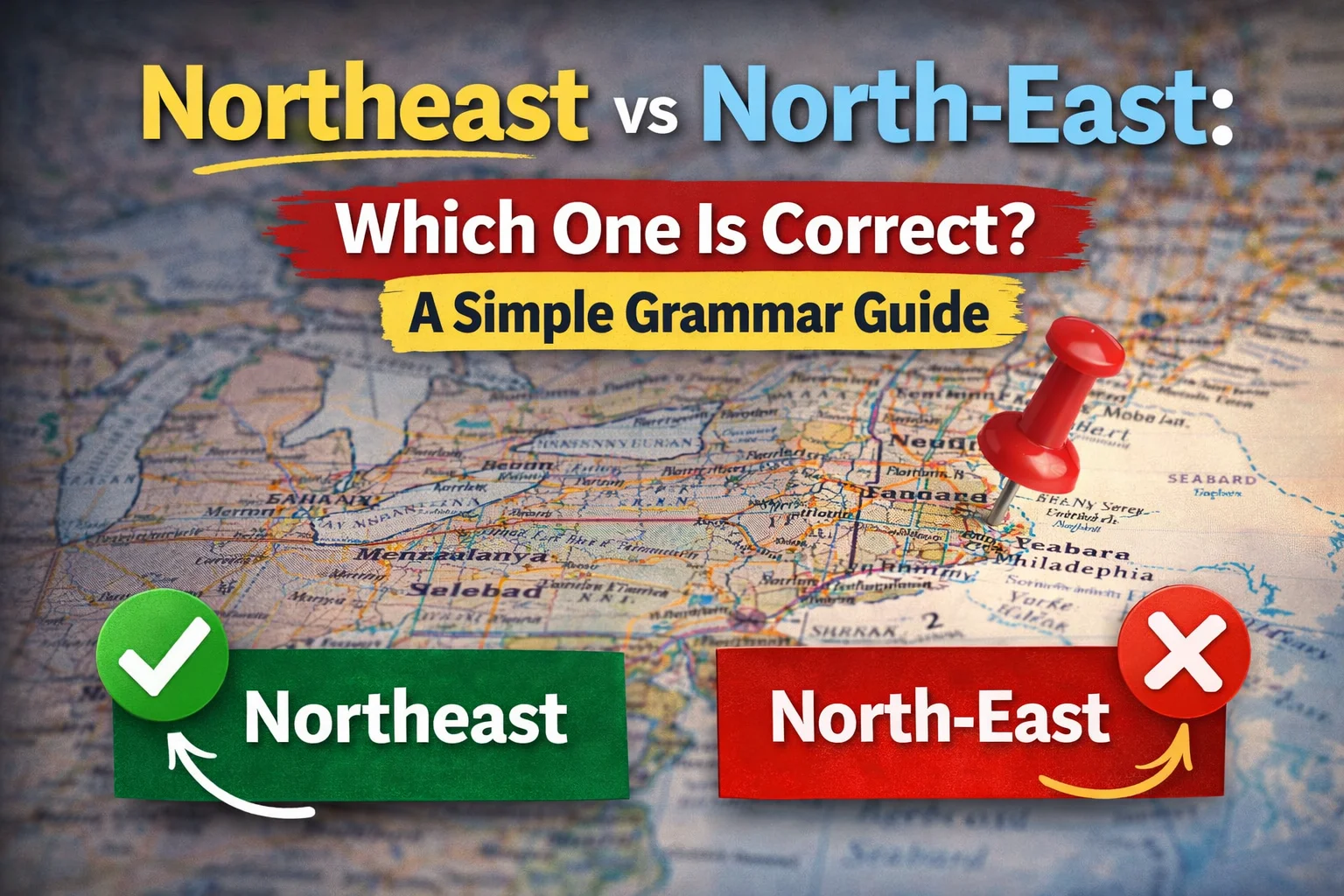
Many English learners notice two spellings for the same direction: Northeast and North-East. At first glance, they look almost identical. The only visible difference is the hyphen. But this tiny punctuation mark often makes people pause and wonder which version is correct.
The truth is that both forms refer to the same direction on a compass. However, modern English usually prefers the single word Northeast. Older texts and some traditional writing styles sometimes use North-East instead.
Understanding the difference between Northeast vs North-East helps writers stay consistent and professional. It also improves clarity, especially when writing blog posts, academic papers, or geographic descriptions.
In this guide, we will explain the meaning, history, and correct usage of these two spellings. You will also see examples, helpful tips, and simple explanations that make the topic easy to understand.
By the end of this article, you will feel confident using the correct form in your writing.
What Does Northeast Mean?
The word Northeast describes a direction between north and east. If you look at a compass, north is at the top and east is on the right side. The space between them forms the northeast direction.
People use this word in many situations. Travelers often describe locations using compass directions. Weather forecasts also use these directions to explain wind patterns. For example, meteorologists may say winds are coming from the northeast.
The word can also describe geographic regions. For instance, the Northeast region of the United States includes states like New York, Maine, and Massachusetts.
Because the word appears so often in modern writing, English has simplified it into one combined word. This makes reading and writing easier for everyone.
Understanding this meaning is the first step in learning the difference between Northeast vs North-East.
Northeast vs North-East: The Core Difference
The debate around Northeast vs North-East is actually very simple. Both spellings describe the same direction between north and east. The difference only involves writing style.
| Feature | Northeast | North-East |
|---|---|---|
| Meaning | Direction between north and east | Same meaning |
| Writing Style | Single combined word | Hyphenated form |
| Modern Usage | Most common in modern English | Mostly used in older texts |
| Style Guide Preference | Preferred by most style guides | Rarely recommended today |
| Example | The storm moved northeast | The wind blew from the north-east |
As you can see, the meaning does not change at all. The only difference is the hyphen.
Most modern dictionaries now list Northeast as the primary spelling. Because of this, the single-word version appears more often in modern books, articles, and websites.
Why Modern English Prefers “Northeast”
Languages evolve over time. Words often become shorter and simpler as people use them more frequently.
In the past, English writers used hyphens in many compound words. Terms like north-east, south-east, and north-west were common in newspapers and books.
However, modern style guides have gradually removed many of these hyphens. Editors realized that combining words improves readability and makes writing look cleaner.
Another reason is digital writing. Search engines and online platforms prefer consistent spelling. Using the single-word form Northeast helps avoid formatting issues.
Because of these reasons, the modern standard favors Northeast when comparing Northeast vs North-East.
Examples of Northeast in Sentences
Looking at real sentences makes grammar rules easier to understand. Here are some examples showing how Northeast appears in everyday writing.
| Sentence | Correct Usage |
|---|---|
| The storm moved toward the northeast overnight. | Direction |
| Our town lies in the northeast part of the valley. | Location |
| Birds travel to the northeast during migration. | Movement |
| Strong winds came from the northeast. | Weather report |
| We visited the northeast region last summer. | Geographic region |
These examples show that Northeast can describe movement, direction, weather, or geographic areas.
When discussing Northeast vs North-East, most modern writers choose the single-word version.
Examples of North-East in Older Writing
Although the single-word form is common today, the hyphenated version still appears in historical writing.
| Sentence | Context |
|---|---|
| The ship sailed toward the north-east coast. | Historical writing |
| Winds blew from the north-east during the storm. | Old weather report |
| The castle stood in the north-east of the kingdom. | Traditional literature |
| The army marched toward the north-east border. | Old narrative style |
These examples show that the hyphenated spelling was widely used in older texts.
When reading classic literature or historical documents, you may notice this version more often. This is why understanding Northeast vs North-East is helpful for readers as well as writers.
Northeast as a Regional Name
Sometimes the word Northeast refers to a specific region rather than a direction.
For example, people often talk about the Northeast United States. This area includes states like New York, Vermont, and New Hampshire.
News reports also use similar terms for other countries. For instance, journalists may discuss the Northeast region of India or the Northeast coast of Brazil.
When used as a regional name, the word is usually capitalized. This shows it refers to a proper geographic area.
Understanding this usage helps clarify the difference between Northeast vs North-East in both grammar and geography.
Do Other Directions Follow the Same Rule?
Yes, other compass directions follow a similar rule in modern English.
| Direction | Modern Form | Older Hyphenated Form |
|---|---|---|
| Northeast | Northeast | North-East |
| Northwest | Northwest | North-West |
| Southeast | Southeast | South-East |
| Southwest | Southwest | South-West |
Just like Northeast, these directions were once written with hyphens.
Over time, most style guides simplified them into single words. This change helps keep writing consistent and easier to read.
When discussing Northeast vs North-East, remembering these similar examples can help reinforce the rule.
Common Mistakes Writers Make
Many writers still make small mistakes when choosing between these spellings.
One common error is switching between Northeast and North-East in the same article. Consistency is very important in professional writing.
Another mistake is writing the phrase as two separate words, such as North East. Most style guides discourage this format.
Some writers also overuse hyphens when they are not necessary.
The easiest solution is simple: use Northeast consistently in modern writing. Doing this avoids confusion and keeps your text aligned with modern grammar standards.
Simple Tips to Remember the Correct Form
Here are a few easy tips to help you remember which spelling to use.
First, remember that Northeast is the modern standard. Most dictionaries and style guides support it.
Second, stay consistent. Once you choose a spelling, use it throughout your article.
Third, check your style guide if you are writing for a specific publication or school.
Fourth, remember that many other directions follow the same rule.
Following these simple tips will help you confidently use the correct spelling when deciding between Northeast vs North-East.
Why This Small Grammar Difference Matters
At first, the difference between Northeast vs North-East might seem very small. However, small grammar details can improve writing quality.
Consistent spelling builds trust with readers. It also makes your writing look more professional.
For online content, consistent spelling can improve search engine optimization. Search engines prefer clear and standardized language.
Editors also notice small grammar choices. Using the correct spelling shows attention to detail and strong writing skills.
Because of this, even a small hyphen can make a meaningful difference in professional communication.
Frequently Asked Questions
Is Northeast or North-East correct?
Both spellings are correct and mean the same direction. However, modern English usually prefers Northeast.
Why did older books use North-East?
Older English used hyphens more frequently in compound words. Over time, many of these words became single words.
Should I always write Northeast?
In most modern writing, yes. The single-word spelling is widely accepted.
Is “North East” correct?
Most style guides avoid writing it as two separate words when referring to the compass direction.
Are other directions written the same way?
Yes. Words like northwest, southeast, and southwest are also commonly written as single words.
When should I capitalize Northeast?
Capitalize it when referring to a specific region, such as the Northeast United States.
Conclusion
The difference between Northeast vs North-East may seem small, but understanding it helps improve your writing.
Both spellings describe the same direction between north and east. The only difference is the hyphen. Older texts often used North-East, while modern English prefers the single-word form Northeast.
Most dictionaries, editors, and style guides recommend the combined spelling. This version is cleaner, easier to read, and more common in modern writing.
When in doubt, choose Northeast and use it consistently throughout your text. Doing so will keep your writing clear, professional, and aligned with modern grammar standards.
Now that you understand the difference between Northeast vs North-East, you can confidently use the correct spelling in your writing.
