


Introduction
Many people hear the terms commutation and pardon in news stories. They often appear when presidents or governors talk about criminal justice decisions. Yet many people still feel confused about what these words actually mean.
Understanding commutation vs pardon is important because both actions change how the law treats someone who committed a crime. However, they work in very different ways.
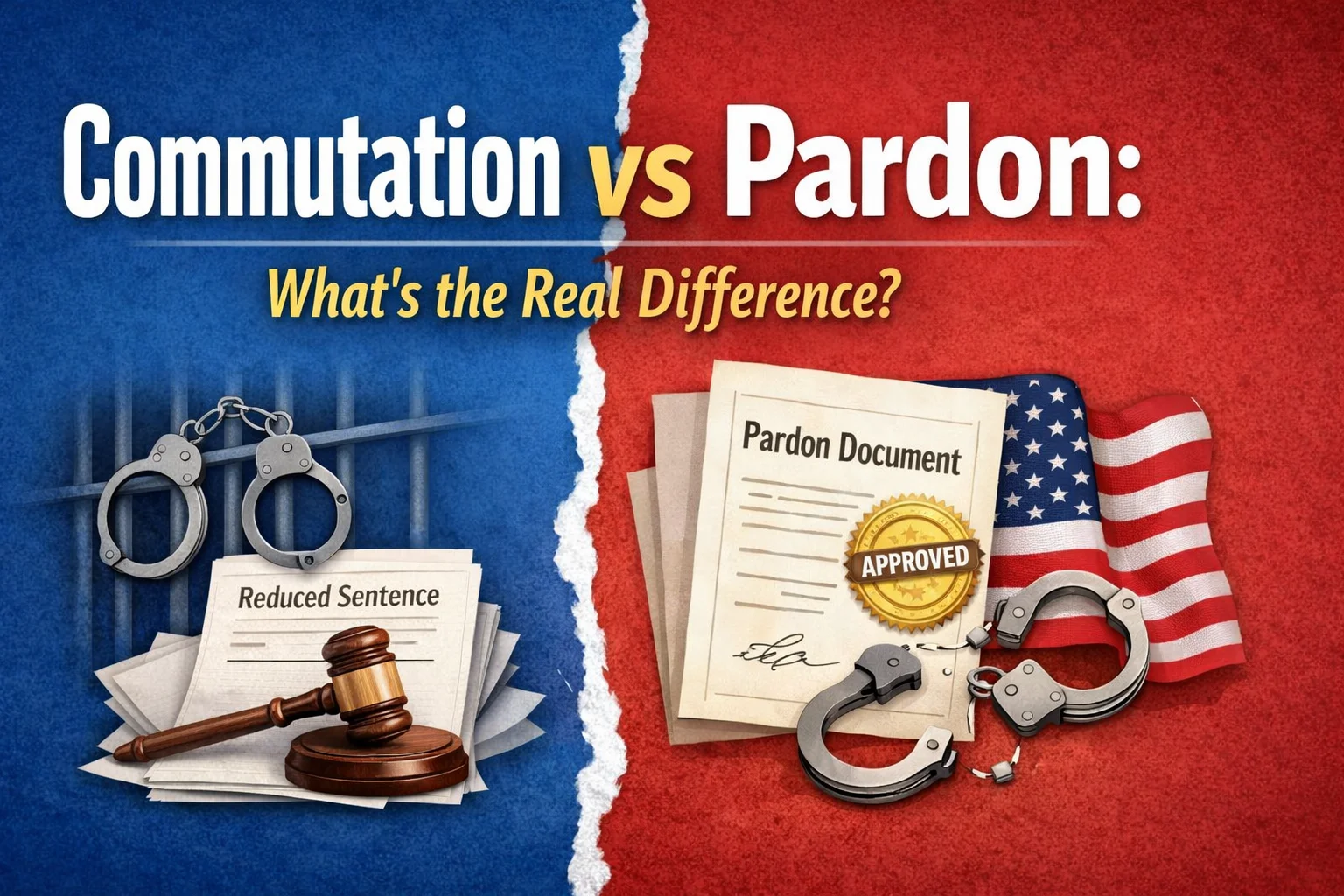
A commutation reduces a criminal punishment. It may shorten a prison sentence or replace it with a lighter penalty. The conviction still remains on the record.
A pardon, on the other hand, offers forgiveness for the crime. It does not always erase the record, but it removes many legal consequences.
These two actions are forms of executive clemency, meaning a government leader shows mercy in special cases.
In this guide, we will explain commutation vs pardon in simple language. You will learn how each one works, why governments grant them, and what they mean for people who receive them.
What Is a Commutation?
A commutation happens when a government leader reduces the punishment for a crime. The person is still guilty of the crime, but the penalty becomes lighter.
For example, imagine someone receives a 20-year prison sentence. If the sentence is commuted, it might drop to 10 years. In some cases, prison time may change to probation.
This is one of the key points in commutation vs pardon. A commutation does not erase the conviction.
Instead, it only changes the punishment.
Commutations often happen when leaders believe a sentence was too harsh. They may also happen when laws change or when the person shows strong rehabilitation.
Sometimes humanitarian reasons matter as well. Serious illness or old age can influence these decisions.
In simple words, a commutation says:
“You were guilty, but the punishment will be reduced.”
What Is a Pardon?
A pardon is an official act of forgiveness for a crime. It removes many legal penalties connected to the conviction.
When people compare commutation vs pardon, this is where the difference becomes clear. A pardon focuses on forgiveness, not punishment.
For example, someone who completed their sentence years ago may apply for a pardon. If approved, they may regain rights such as voting, serving on a jury, or holding public office.
A pardon usually comes after a person proves they have changed. Governments often look at behavior, community work, and time passed since the crime.
Here is a simple idea behind a pardon:
“You committed the crime, but society forgives you.”
This forgiveness can help people rebuild their lives and move forward.
Key Differences Between Commutation and Pardon
Understanding commutation vs pardon becomes easier when you compare them side by side.
| Feature | Commutation | Pardon |
|---|---|---|
| Main purpose | Reduce punishment | Forgive the crime |
| Criminal conviction | Remains on record | Often forgiven but still recorded |
| Prison sentence | May shorten or change | Usually already completed |
| Rights restored | Rarely | Often restored |
| Message | Mercy in punishment | Mercy after punishment |
This table shows the core difference in commutation vs pardon.
A commutation focuses on the sentence.
A pardon focuses on forgiveness and restoration.
Who Has the Power to Grant Them?
The power to grant commutations and pardons usually belongs to top government leaders.
In the United States, the President can grant them for federal crimes. At the state level, governors often have this power.
This authority is known as executive clemency.
When discussing commutation vs pardon, clemency allows leaders to correct unfair outcomes or show compassion.
However, there are limits.
For example:
- A president cannot pardon state crimes.
- A governor cannot pardon federal crimes.
These powers exist to balance the justice system. Courts apply the law, while leaders may consider fairness and mercy.
Because of this power, clemency decisions often attract strong public attention.
Why Governments Grant Commutations
Commutations usually happen when a punishment seems too harsh or unfair.
When discussing commutation vs pardon, commutations normally occur while the person is still serving their sentence.
Leaders may grant commutations for several reasons:
- The original sentence was too severe
- The person showed strong rehabilitation
- New laws reduced penalties for similar crimes
- Humanitarian concerns exist
For example, someone who served many years and maintained excellent behavior might receive a reduced sentence.
Here is a quick overview of common reasons.
| Reason for Commutation | Explanation |
|---|---|
| Harsh sentencing | Punishment considered too severe |
| Legal reform | Laws changed after sentencing |
| Rehabilitation | Prisoner shows positive behavior |
| Health concerns | Serious illness or old age |
These situations show how commutations can correct overly harsh punishments.
Why Governments Grant Pardons
Pardons often focus on giving people a second chance.
When examining commutation vs pardon, pardons typically happen after someone completes their punishment.
Governments may grant pardons when they believe the person has changed.
Common reasons include:
- Evidence of rehabilitation
- Long period without new crimes
- Community contributions
- Unfair consequences from a past conviction
For instance, someone who committed a minor offense decades ago may struggle to find employment. A pardon can reduce those barriers.
Here is a simple table explaining the benefits of a pardon.
| Benefit of a Pardon | How It Helps |
|---|---|
| Restores civil rights | Voting or jury service |
| Reduces stigma | Shows official forgiveness |
| Improves opportunities | Helps with jobs and housing |
| Encourages reintegration | Supports rebuilding life |
These benefits show why many people apply for pardons.
Real-Life Examples of Commutation and Pardon
Real examples make commutation vs pardon easier to understand.
Imagine a person sentenced to life in prison. After many years, leaders decide the punishment was too severe. They reduce the sentence to 25 years.
That is a commutation.
Now imagine another person who committed a crime 30 years ago. They completed the sentence and lived responsibly ever since. The government officially forgives the offense.
That is a pardon.
These two examples show the practical difference.
One changes the punishment. The other focuses on forgiveness and reintegration.
How the Clemency Application Process Works
Applying for clemency usually involves a formal process.
People requesting commutation vs pardon must submit detailed applications.
These applications often include:
- Court records
- Personal statements
- Evidence of rehabilitation
- Letters of support
Legal officials review these materials carefully. Some governments also have special boards that recommend whether clemency should be granted.
However, the final decision usually belongs to the president or governor.
Because every case is unique, approval is never guaranteed.
How Commutation and Pardon Affect Criminal Records
Another important part of commutation vs pardon is how they affect criminal records.
A commutation usually does not remove the conviction. It only changes the punishment.
A pardon, however, signals forgiveness and may restore certain rights.
Here is a simple comparison.
| Record Impact | Commutation | Pardon |
|---|---|---|
| Removes conviction | No | Usually no |
| Reduces punishment | Yes | Not the main goal |
| Restores civil rights | Rarely | Often |
| Symbol of forgiveness | Limited | Strong |
This difference explains why people often seek pardons after finishing their sentence.
Common Misunderstandings About Commutation vs Pardon
Many people misunderstand commutation vs pardon because both involve mercy.
One common myth is that commutation proves someone was innocent. This is not true. The person is still legally guilty.
Another misunderstanding is that a pardon erases history completely. In most cases, the conviction still appears on records.
Some people also believe pardons happen often. In reality, they are relatively rare and carefully reviewed.
Understanding these facts helps people better interpret legal news and government decisions.
Why the Difference Matters
The discussion around commutation vs pardon goes beyond legal definitions. It also touches on fairness, justice, and second chances.
Commutations can correct overly harsh sentences. Pardons can help people rebuild their lives.
Together, these tools give governments a way to show mercy while still respecting the law.
They also remind society that justice systems should allow room for compassion.
Frequently Asked Questions
1. What is the main difference between commutation and pardon?
The key difference in commutation vs pardon is that commutation reduces punishment, while a pardon forgives the crime.
2. Does commutation mean someone is innocent?
No. A commutation only reduces the sentence. The conviction still remains.
3. Can a pardon erase a criminal record?
Usually it does not erase the record, but it removes many legal penalties.
4. Who can grant commutations and pardons?
Presidents grant them for federal crimes, while governors often grant them for state crimes.
5. Can someone receive both?
Yes. A person may receive a commutation first and later apply for a pardon.
6. Are pardons common?
No. Pardons are relatively rare and usually require strong evidence of rehabilitation.
Conclusion
Understanding commutation vs pardon helps people see how mercy works in the justice system.
A commutation reduces a punishment but leaves the conviction in place. It often happens when a sentence seems too harsh.
A pardon offers forgiveness and may restore important rights. It usually happens after someone completes their sentence and proves rehabilitation.
Both actions are forms of executive clemency. They allow governments to balance justice with compassion.
By learning the difference between commutation vs pardon, readers can better understand legal decisions and the idea of second chances in society.
